Western steels
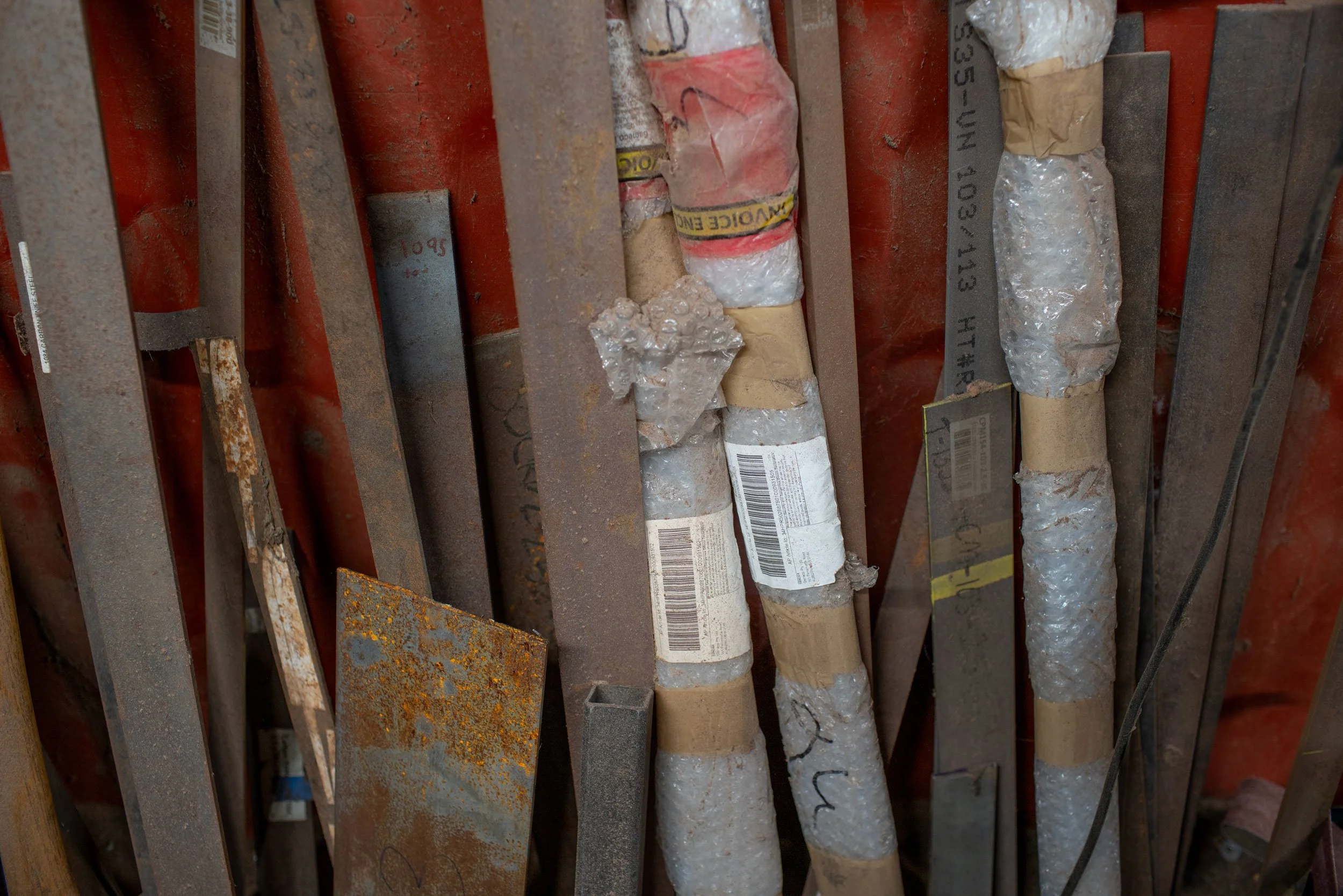
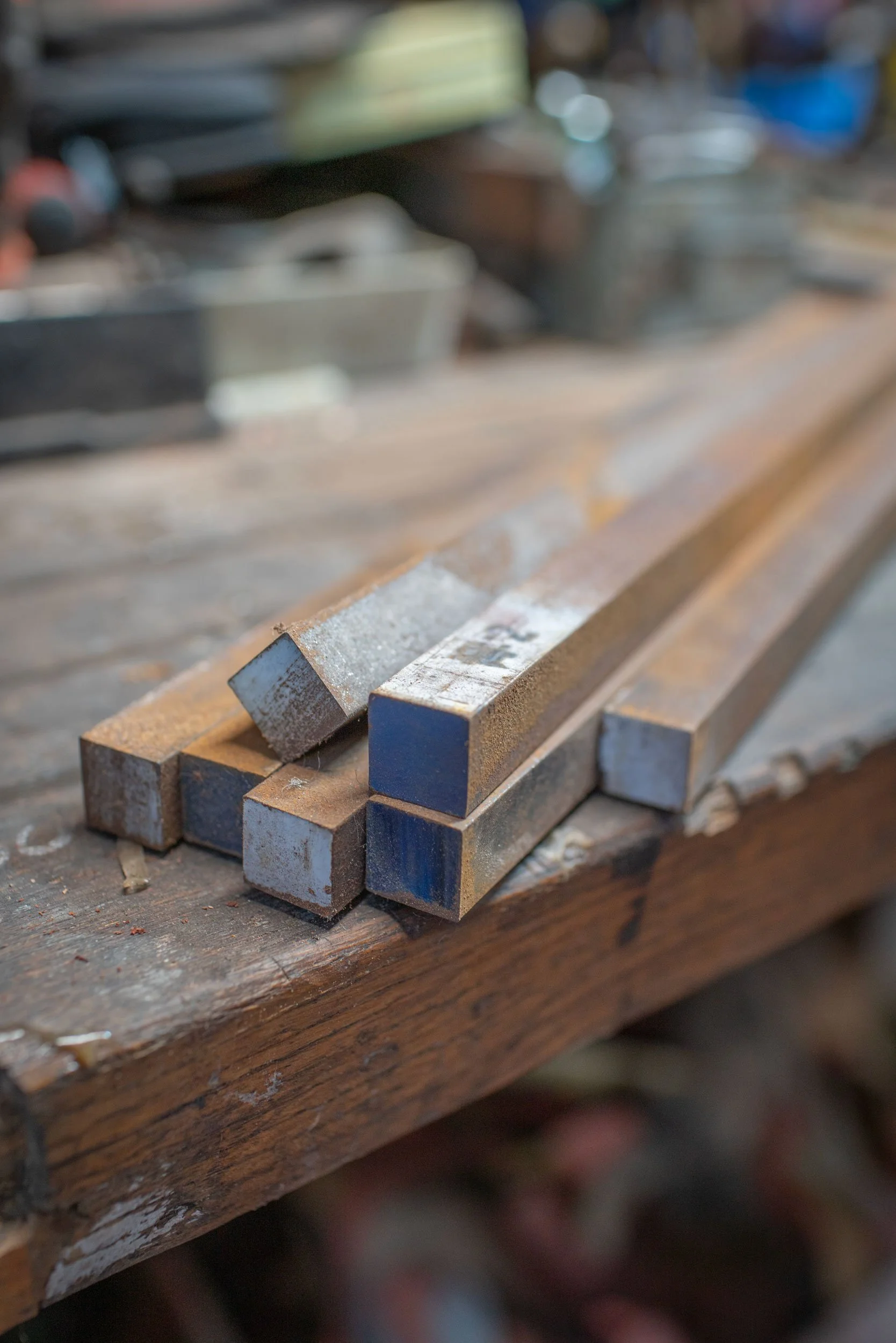
Iron Hill Smithy only uses high quality steels, both stainless and carbon. This allows specific heat treatment and forging parameters to be adhered to, providing a high quality blade. Typical construction styles are listed alongside alloy types.
Carbon steels include:
• 26C3 (Monosteel, laminate)
• 1095 (Honyaki)
• 80CRV2 (Damascus, monosteel, laminate)
• 1084 & 15N20 (Damascus, some laminate)
• Apex Ultra
Stainless steels (stock removal, not forged)
• CPM 154
• 14C28N
• 12C27
• S35VN
• Nitro-V
Hand forging
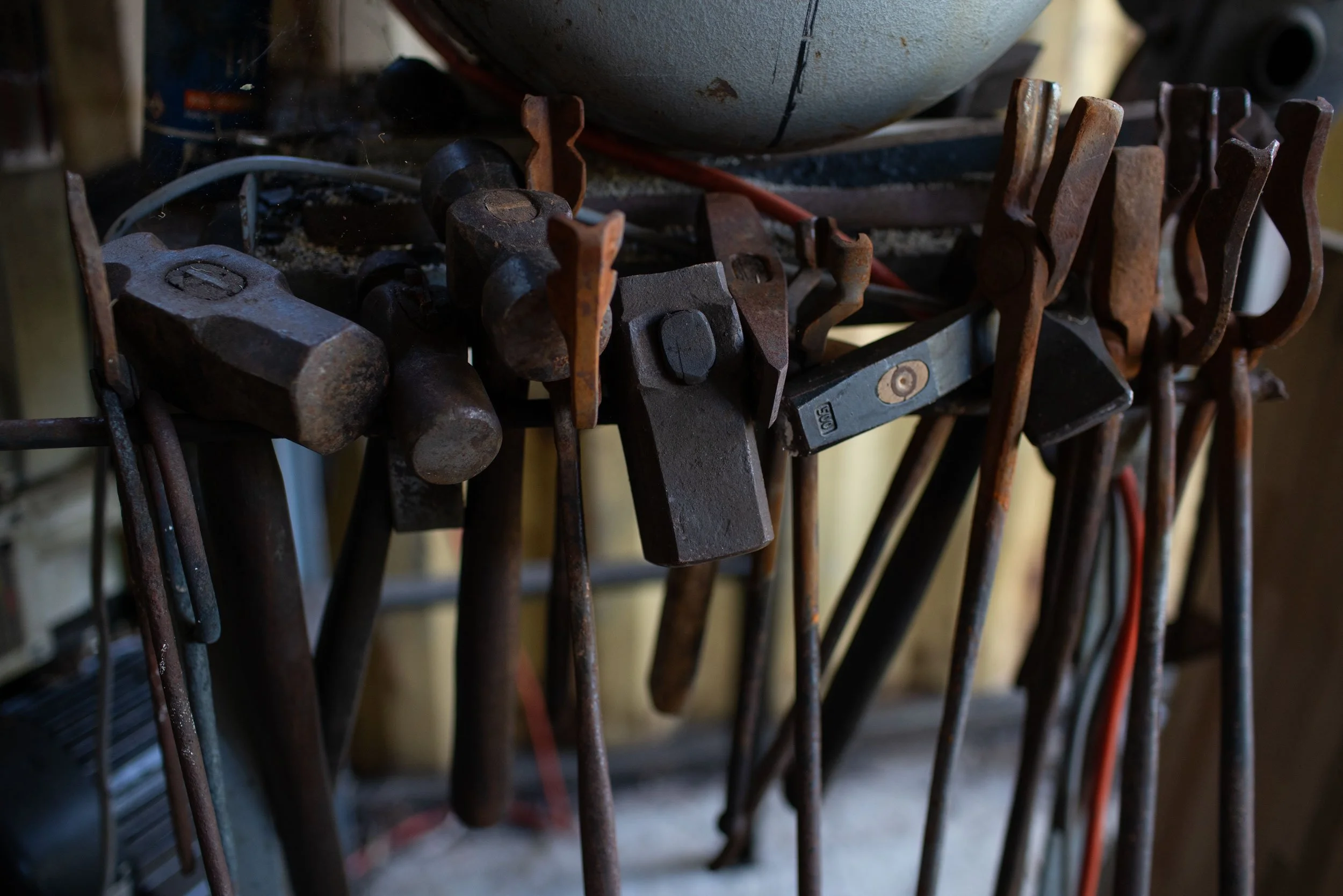
Forged blades are heated in a gas forge whilst ensuring temperatures are controlled to enable optimum properties to be achieved. Various hammers and cutting tools are used to shape, stretch, weld and texture the billets and blanks, while manual and hydraulic presses help move larger pieces of material quickly.
Once the shapes are completed, blades are taken through a range of heat treatment processes to soften, refine grain and reduce stresses induced by forging. This ensures tough, sharp and long lasting blades.
Grinding
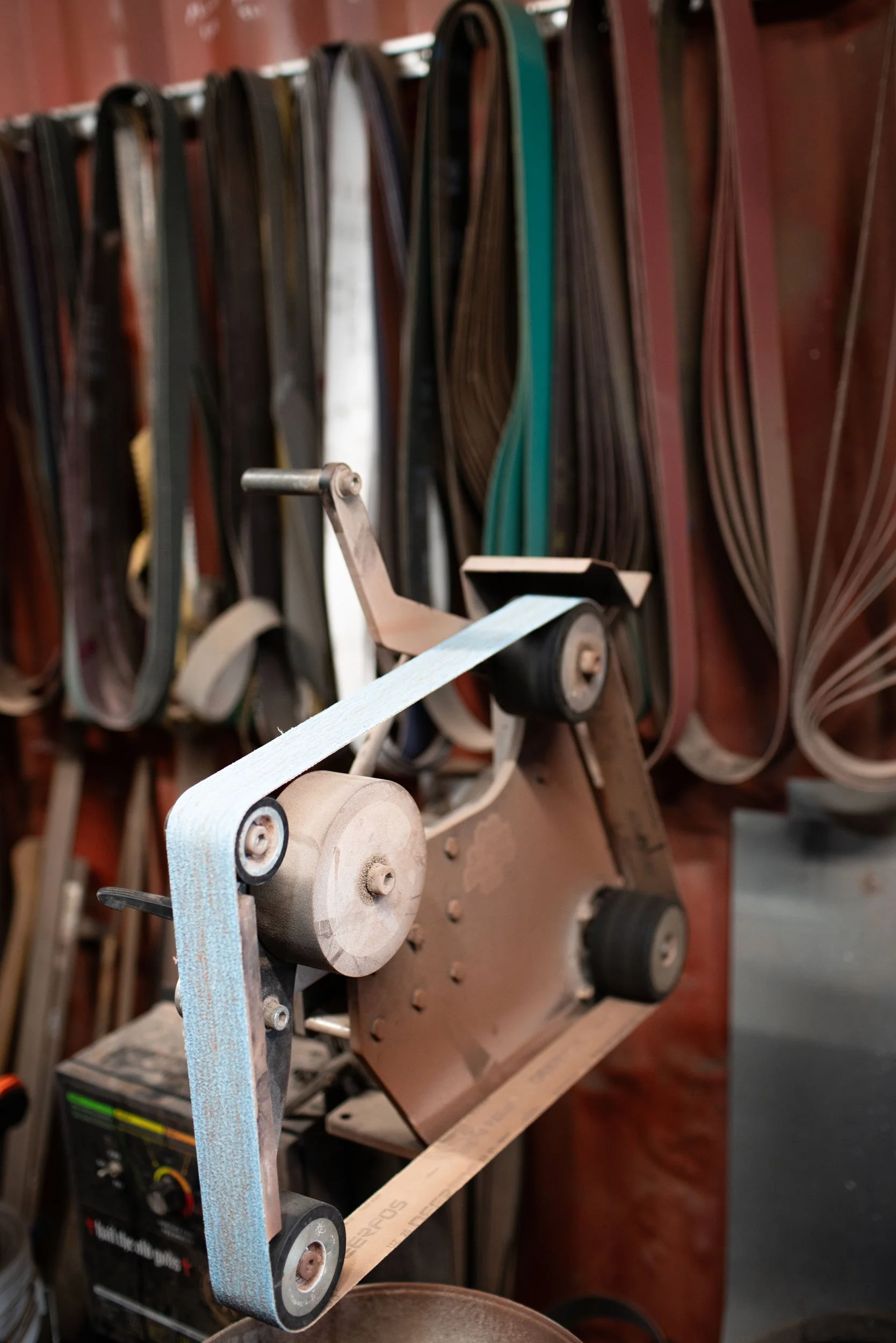
High powered belt and disc grinders are used to shape and polish both knives and handles, with various attachments and techniques allowing flat, hollow and convex grinds to be made. Blades are kept cool during all grinding processes to preserve hardened properties. Some steels such as stainless do not benefit from forging and are made from sheets or bars of steel. This is known as stock removal and is often the most effective way to produce knives in particular steels. Surface finishes can vary, although I prefer to leave forge scale along the upper part of the blade. Known as a “karouchi” or “blacksmith’s
finish”, it is a traditional style and adds to the surface protection of the knife.
Blades are generally hand finished with a style surface polishing technique, such as satin. Hand sanding is a time consuming process but is still faster than polishing on natural stones. For San Mai blades, the transition between steel and cladding can be enhanced with various etching or polishing techniques. Damascus, or pattern welding, allows contrasting finishes to be achieved that have a recognisable look.
Japanese carbon steel
Japanese knife steel is famous for its exceptional sharpness, durability and edge retention. There are several variants, and Iron Hill Smithy currently sells blades forged from Blue Paper #2.
Also known as Aogami, Aogami Ni, and Blue 2, it is a common core material in Japanese knives. Blue 2 contains between 1.05% and 1.15% carbon and typically ranges in hardness from 61 to 64 HRC. This allows a stable but very hard edge that lasts longer than many other steels and remains relatively easy to sharpen with good feedback through the stone. It is almost always used as a laminated core layer between softer iron or steel layers, aka cladding.
White Paper #2 (Shirogami Ni) is also used but is not sold at this time. It is an even higher purity steel but is extremely difficult to forge to its full potential, resulting in higher cost.
Cladding
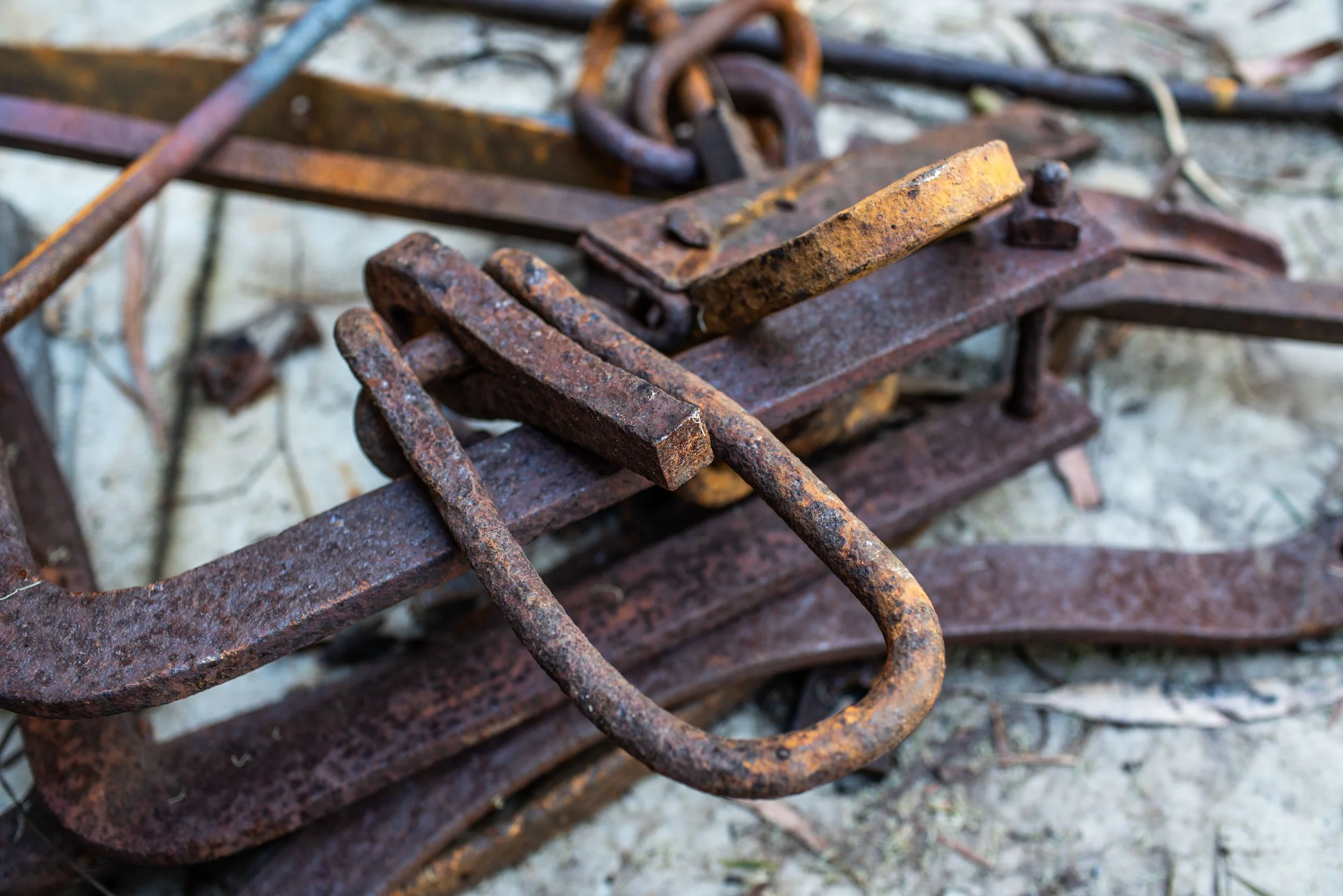
I generally produce San Mai (three layer) blades that incorporate a hard steel core and soft, tough wrought iron jacket. Wrought iron is no longer produced, is increasingly scarce and expensive to acquire, and can often be close to a century old. It produces beautiful unique patterns due to silica inclusions which is reminiscent of wood grain when polished and etched. Other cladding materials include modern mild steel, stainless steel, or salvaged low carbon steels from older sources. All cladding is joined to its core through a process known as forge welding.
Occasionally copper and/or nickel is used as an additional layer to provide an aesthetic effect and stop carbon migrating from the steel into the iron during forging.
Constructing laminated blades such as the above types is a time consuming process that requires skill, experience and often multiple failures, but yields beautiful results.
Heat treatment
Heat treatment is the process most critical to making a good knife. It involves various steps and starts upon the completion of forging, with specific temperatures for each particular steel. The most well known stage is hardening.
This involves heating the blade to a predetermined temperature and rapidly cooling it to lock the carbon into a hard microstructure, creating the hardness needed. This is called quenching, and for carbon steels it requires specialised oils for best outcomes, and in some cases water is used, although this is extremely difficult to do successfully.
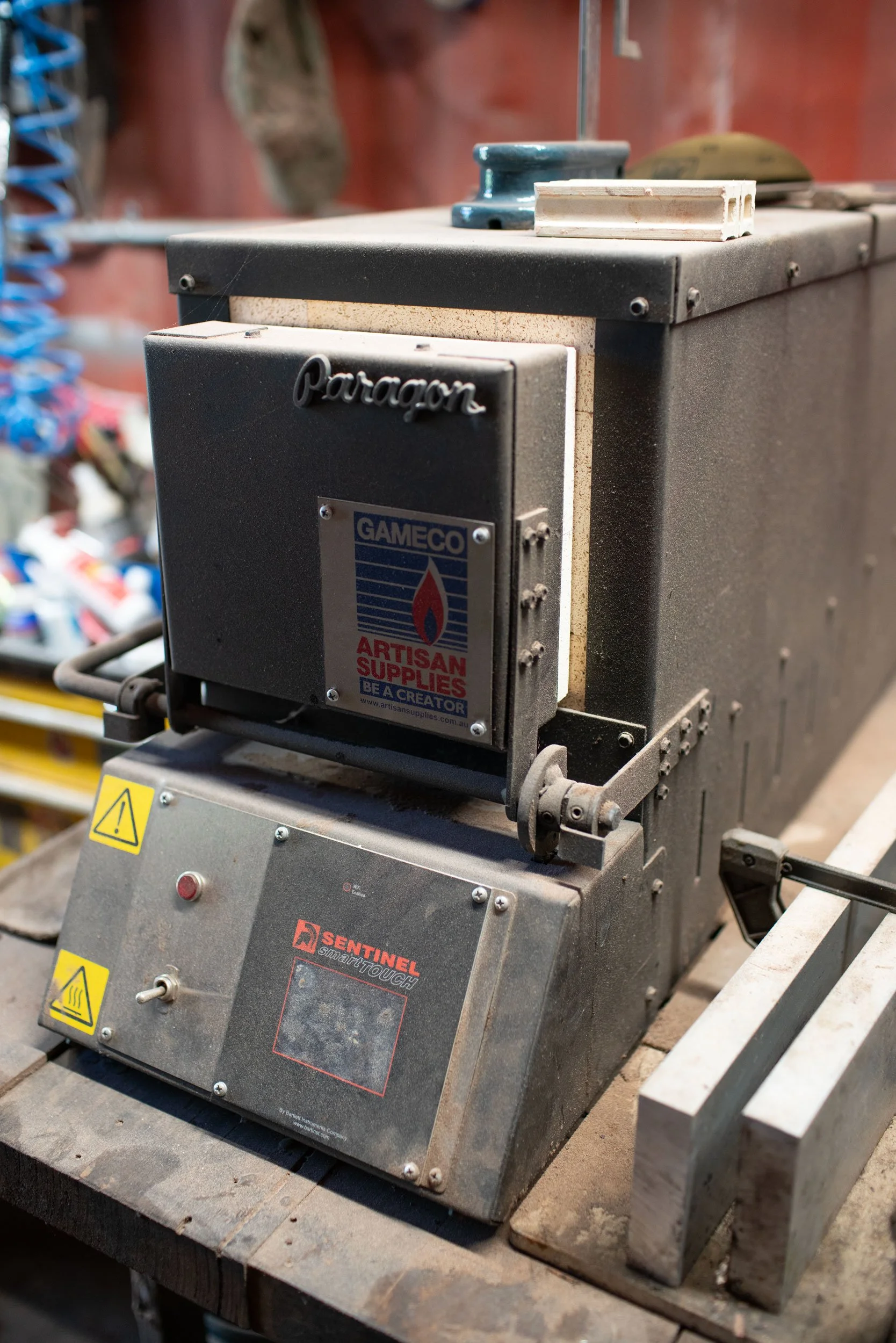
Air hardening steels such as martensitic stainless steel or some tool steels require plate quenching. I use specific “recipes” and a dedicated kiln to ensure the guesswork is removed. Following hardening, blades must be tempered to remove some brittleness.
In some cases, clay mixtures are used to create differential hardening. Special mixtures of clay, charcoal and other materials, or special cements, are mixed and applied carefully to specific steels in patterns that allow the edge to reach peak hardness whilst the spine remains softer. This results in beautiful patterns known as “Hamon”.
Handles
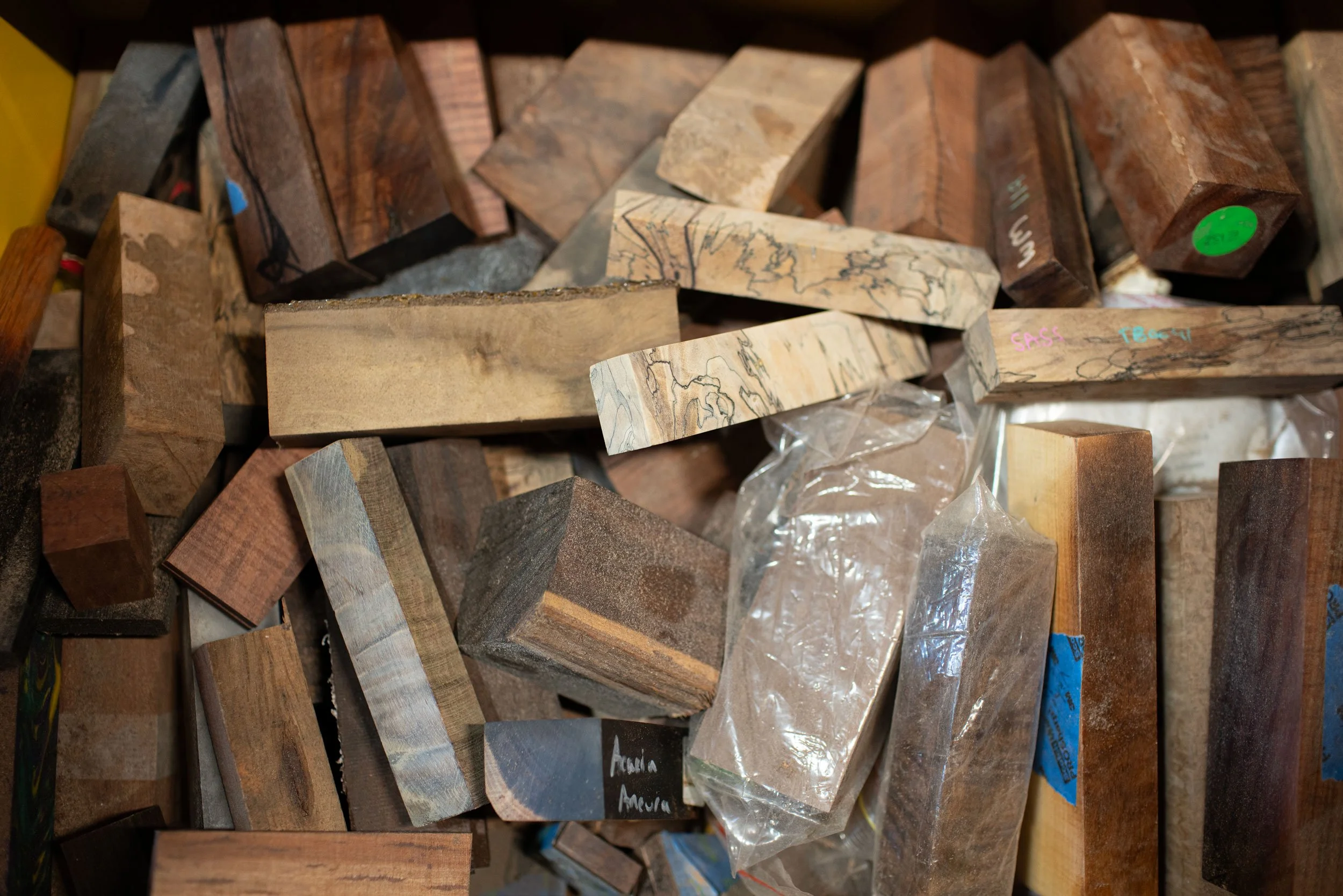
I use both naturally seasoned and stabilised timbers. Natural timber is more affordable, but stabilised timber lasts longer and resist water damage more effectively. Stabilised with special resin, this handle material is also usually heavier than its equivalent natural wood. Handles are occasionally accompanied with spacers or ferrules and bolsters made of synthetic, natural or various metals. I source my stabilised wood from local makers, and will sometimes use foreign materials if it has caught my eye. My preferences are Jarrah, Tasmanian Blackwood, or Goldfields timbers.